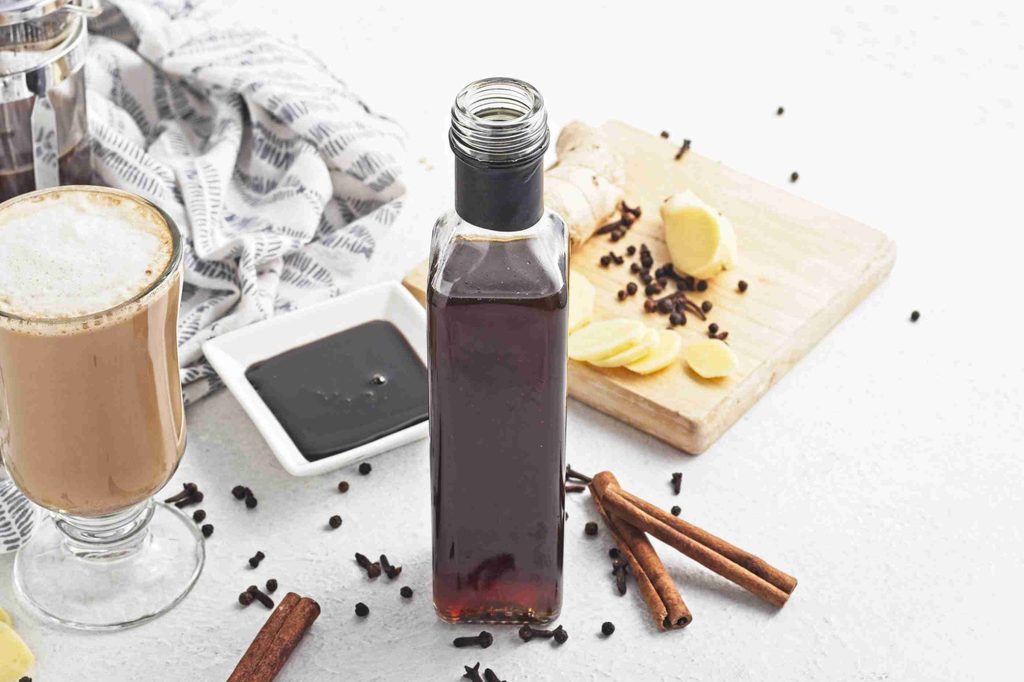
Homemade Gingerbread Syrup for Coffee and Cocktails
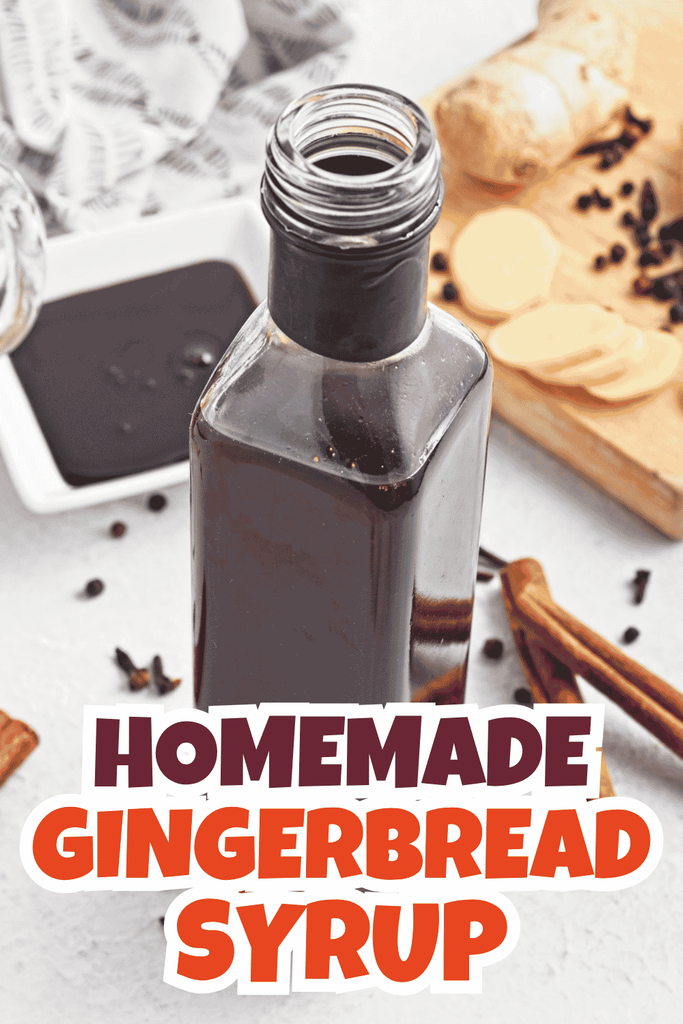
Gingerbread coffee shows up on café menus in November and is gone by January. A jar of homemade gingerbread syrup in your fridge doesn’t run on that schedule.
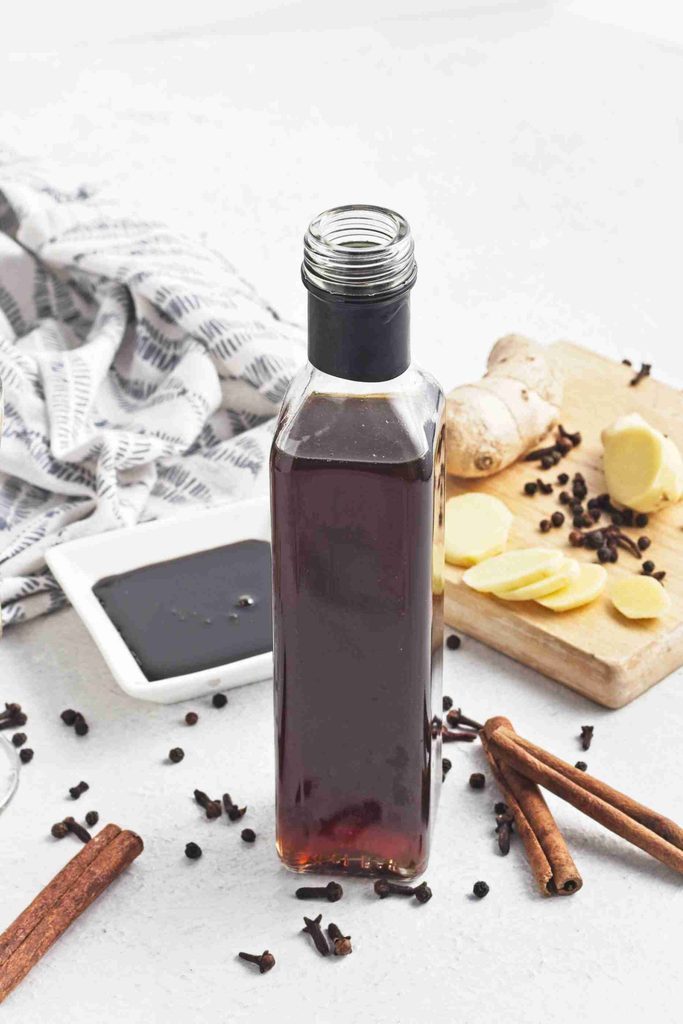
Fresh ginger, whole cloves and molasses simmer into something you can pour into coffee, cocktails, or pancakes any month you like.
Scroll down for the ingredients and step-by-step.
Why You’ll Love This Recipe
- Fresh ginger root and whole spices go into the pot and come back out, so you decide how long they steep
- It strains clear, which means nothing gritty settles in the bottom of your glass
- One batch fills a bottle and covers around sixteen drinks
- Coffee, cocktails, hot chocolate, pancakes, oatmeal: the bottle easily earns its shelf space
- The sugar dissolves into water rather than caramelizing, so there’s no thermometer and no color window to catch
- It keeps two weeks in the fridge, and the flavor settles and matures as it chills
When and Who This Is For
You spend forty-five minutes on it once, most of that waiting, and for the next two weeks your morning coffee has an upgrade sitting right there in the fridge door. That’s the whole appeal, and it’s the same reason a bottle of cocoa syrup tends to live in mine.
It’s a useful bottle to have during any stretch when people keep dropping by, since it works in a mug and in a cocktail shaker without needing a different plan for each.
Everything in it is plant based, so it pours into oat milk and whole milk with equal ease, and it’s naturally gluten free, nut free and soy free. If you’re serving strict vegans, reach for an organic or beet-based brown sugar, since some refined cane sugar is filtered through bone char.
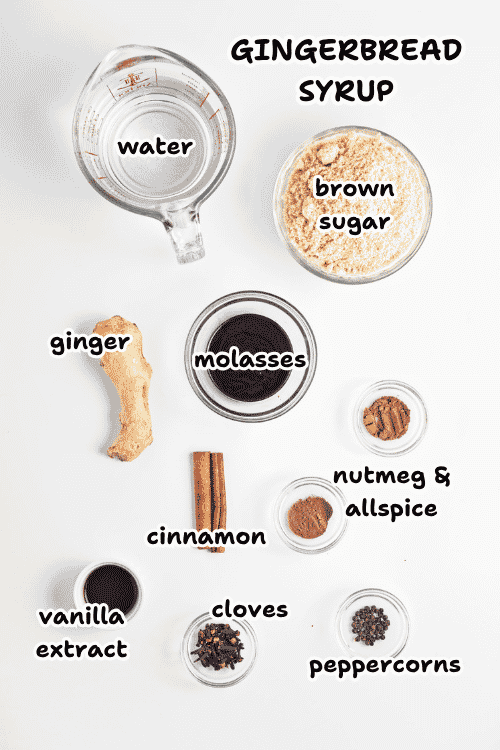
Ingredients for This Gingerbread Simple Syrup
- 1½ cups light brown sugar (305 g)
- 1½ cups water (352 ml)
- 3 inches fresh ginger (60 g), peeled and thinly sliced
- 2 teaspoons whole cloves (4 g)
- 2 large cinnamon sticks (10 g)
- ½ teaspoon whole black peppercorns (1 g)
- ½ teaspoon ground nutmeg (1 g)
- ½ teaspoon ground allspice (1 g)
- 2 teaspoons vanilla extract (10 ml)
- 1 to 2 tablespoons molasses (15 to 30 ml), not blackstrap
A few notes on the ingredients:
Light brown sugar goes into the water at roughly a one-to-one ratio, which makes this a gingerbread simple syrup at heart. The molasses already in brown sugar is doing part of the work before you add any more.
Fresh ginger, sliced thin. A thick coin and a thin slice spend the same twenty-five minutes in the pot, but the thin one has more surface area and gives up more of itself in that time. Look for a piece with tight, smooth skin. Ginger that has gone wrinkly has lost water, which means there’s less in there to give.
Whole cloves, cinnamon sticks and peppercorns come back out at the end, and that matters more than it sounds like it should. Spices left sitting in a bottled syrup keep extracting for as long as they’re in there, and clove and cinnamon will take over a syrup given enough time. Straining is what holds the balance where you left it.
Black peppercorns are the ingredient most likely to make you look twice. The connection is older than it appears: the Scandinavian word for gingerbread cookies, pepparkakor, translates as pepper cookies, and pepper was a defining spice in the fifteenth-century versions. Most modern recipes drop it. This one doesn’t.
Molasses, but not blackstrap. Molasses comes from boiling down cane syrup, and each round pulls more sugar out of it. The third and final boil leaves blackstrap, which is very dark, thick, and low enough in sugar that its bitterness carries straight through whatever you put it in. Regular or dark molasses is what this wants.
Vanilla extract goes in off the heat at the end, alongside the molasses, and both are added to taste rather than measured in blind.
How to Make Gingerbread Syrup
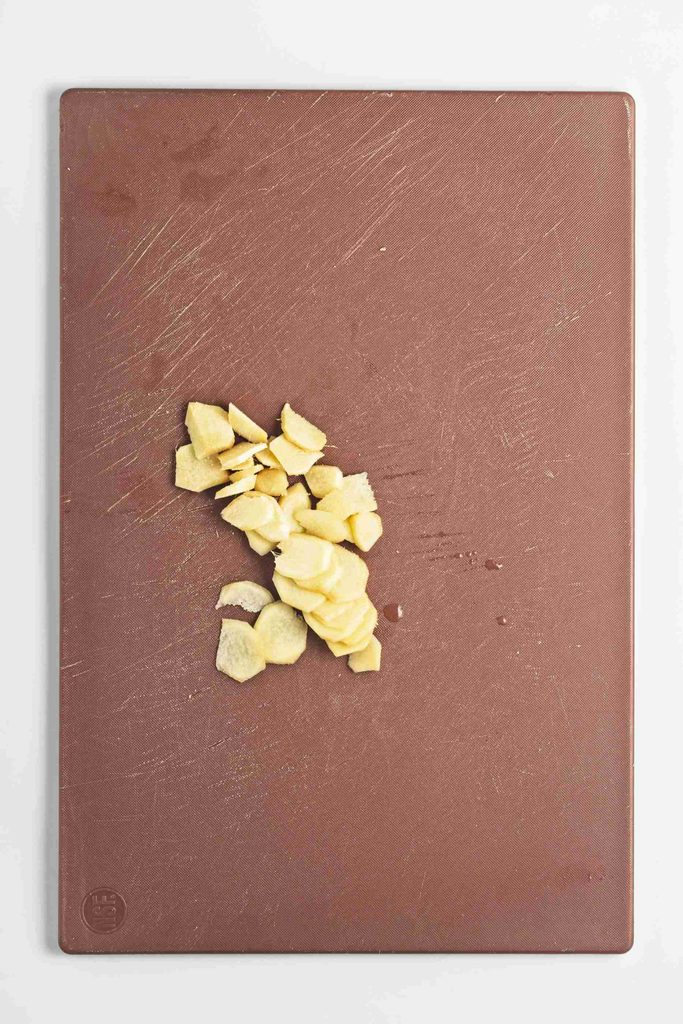
1. Slice the ginger thin.
Peel the piece of ginger, then slice it as thinly as you can manage. The edge of a spoon takes the skin off better than a peeler does, since it follows the knobs instead of cutting chunks out around them.
2. Dissolve the sugar.
Put the water and brown sugar in a medium pot over medium heat and stir until the sugar has fully dissolved and you can’t feel any grit when you drag the spoon across the bottom.
3. Add the spices and bring it to a simmer.
In go the ginger, cloves, cinnamon sticks, peppercorns, nutmeg and allspice. Bring it up to a simmer and let it cook for five minutes.
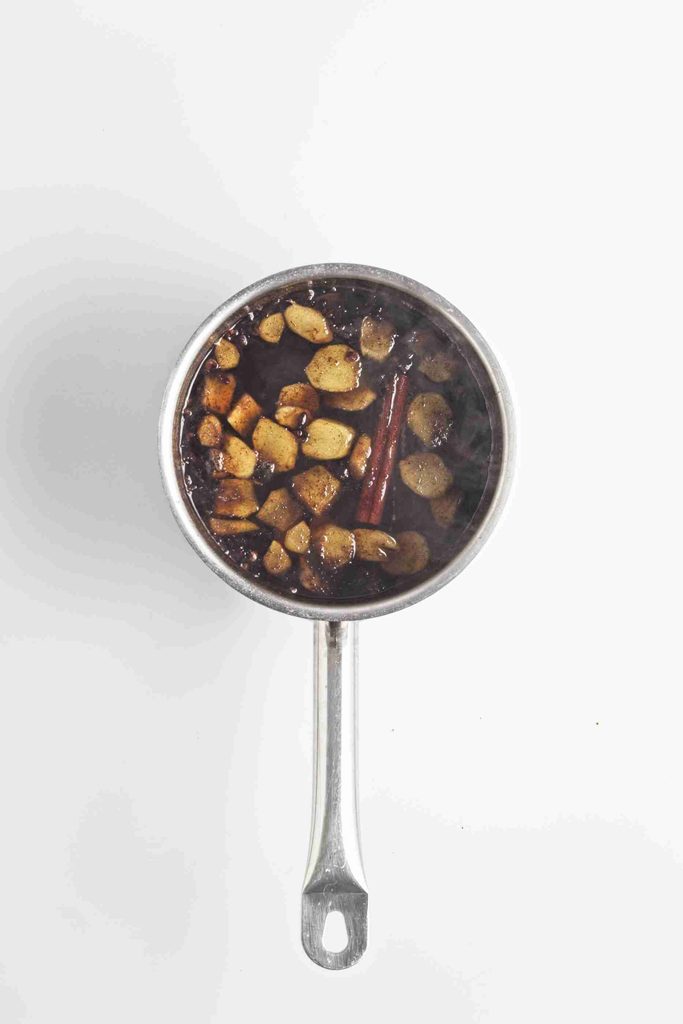
4. Take it off the heat and leave it for twenty minutes.
The burner is off, but the pot holds enough heat to keep the spices steeping the whole time it’s cooling. Twenty minutes is the mark. Go longer and you’ll pull more out of the cloves and pepper, which shifts the balance, so set a timer if you’re the wandering type.
5. Strain it.
Set a fine mesh sieve over a bowl and pour the syrup through. The ginger, cloves, cinnamon sticks and peppercorns all catch in the sieve. The ground nutmeg and allspice won’t, since they’re fine enough to pass straight through, so line the sieve with a layer or two of cheesecloth if you want it completely clear.
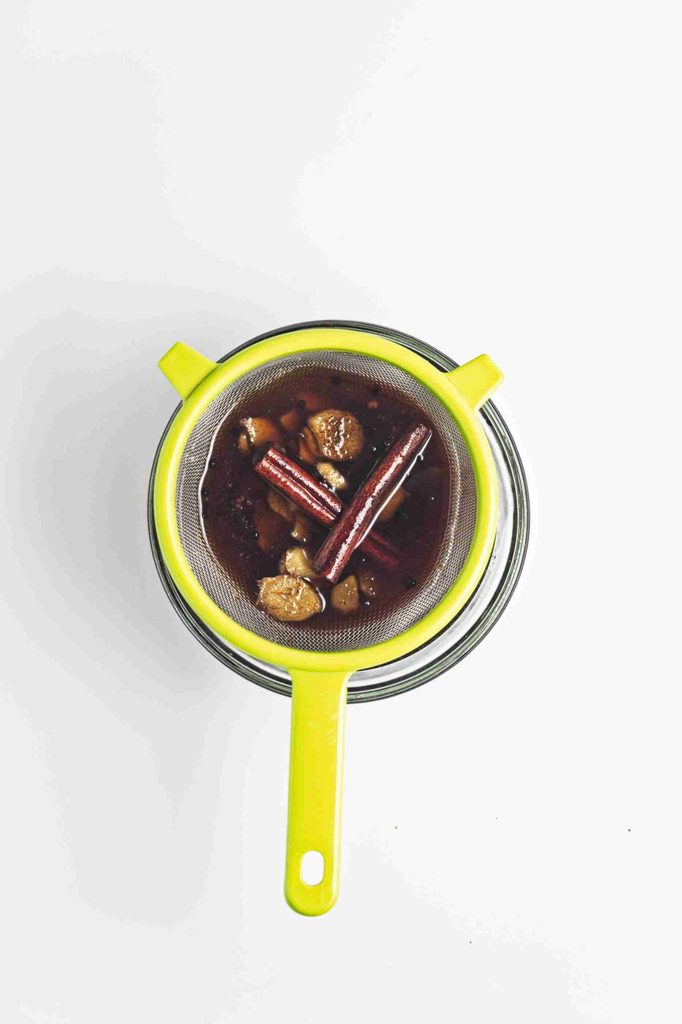
6. Stir in the vanilla and molasses.
Add the vanilla, then start with one tablespoon of molasses. Stir, taste, and decide whether you want the second. This is the one place in the whole thing where you’re steering, so don’t commit to the full two tablespoons before you’ve tried one.
7. Bottle it and refrigerate.
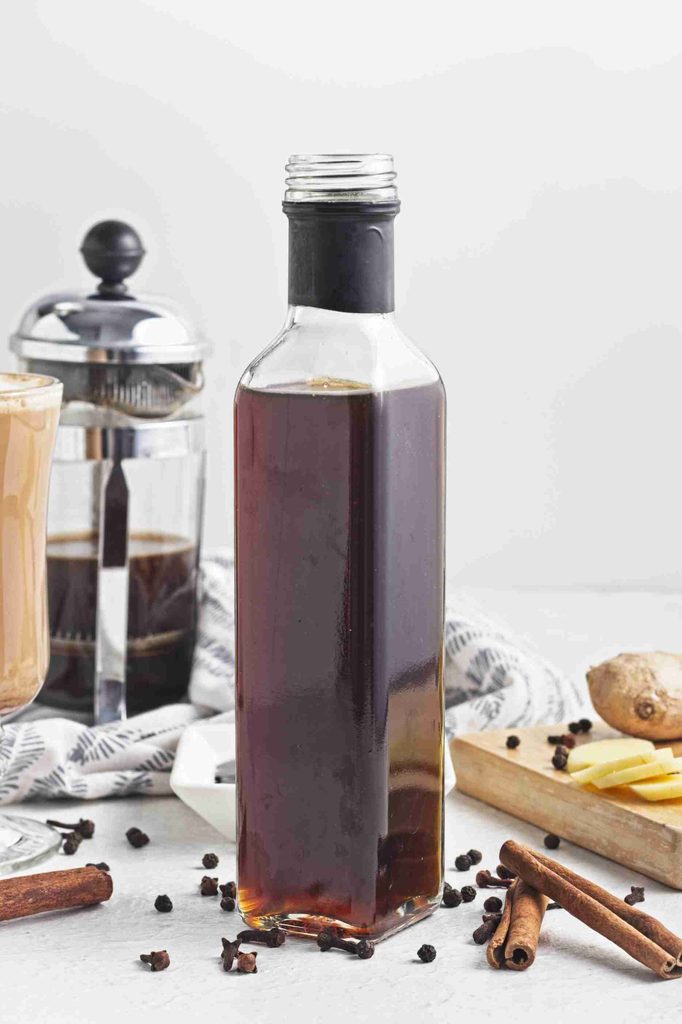
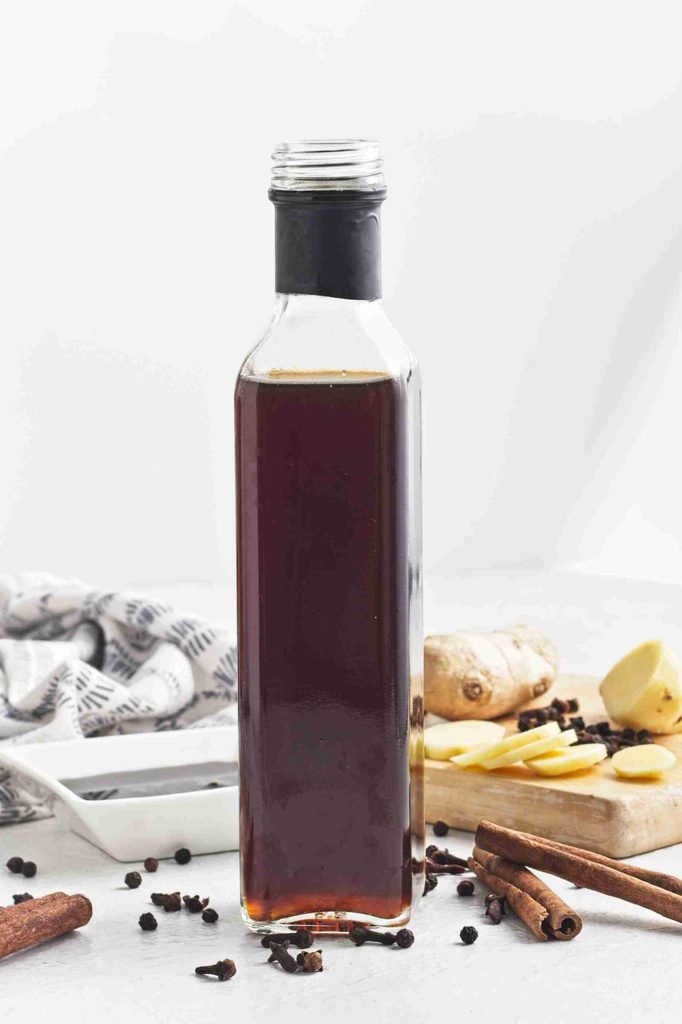
Let the syrup cool to warm before it goes into a glass bottle, since cold glass and hot syrup is how bottles crack. Seal it once it’s fully cool and keep it in the fridge for up to two weeks. It settles and matures as it chills, so the bottle you pour on day three isn’t quite the one you sealed on day one.
Tips and Variations
- Cheesecloth is what separates “mostly clear” from “clear.” A sieve on its own catches the ginger, cloves, cinnamon and peppercorns. The ground nutmeg and allspice go straight through it, so a layer or two of cheesecloth in the sieve is what catches those
- For a thicker syrup, simmer an extra five minutes before the steep. You’re reducing water, which leaves more body behind. It concentrates everything else at the same time, so hold back on the molasses until you’ve tasted it
- Doubling works with no adjustment. Same ratios, same steeping time, bigger pot
- Don’t bin the strained ginger. The slices come out soft and syrup-soaked, and they’ll do a job dropped into a mug of hot water or tea
- Write the date on the bottle. Two weeks passes faster than you expect, and a syrup with fresh ginger in its history isn’t one to guess about
Ways to Use It
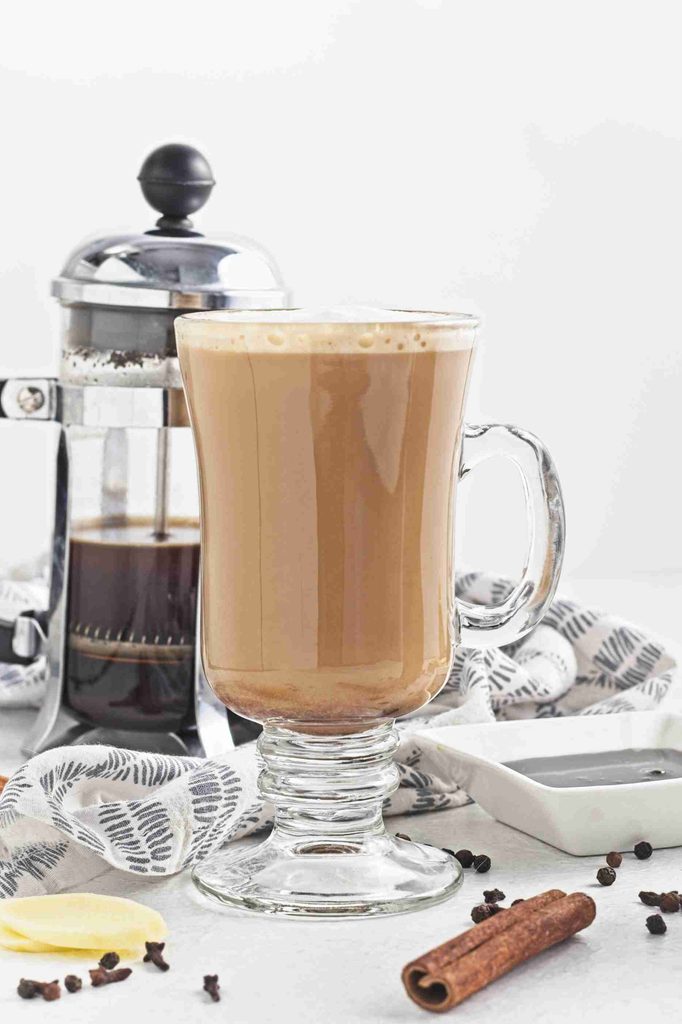
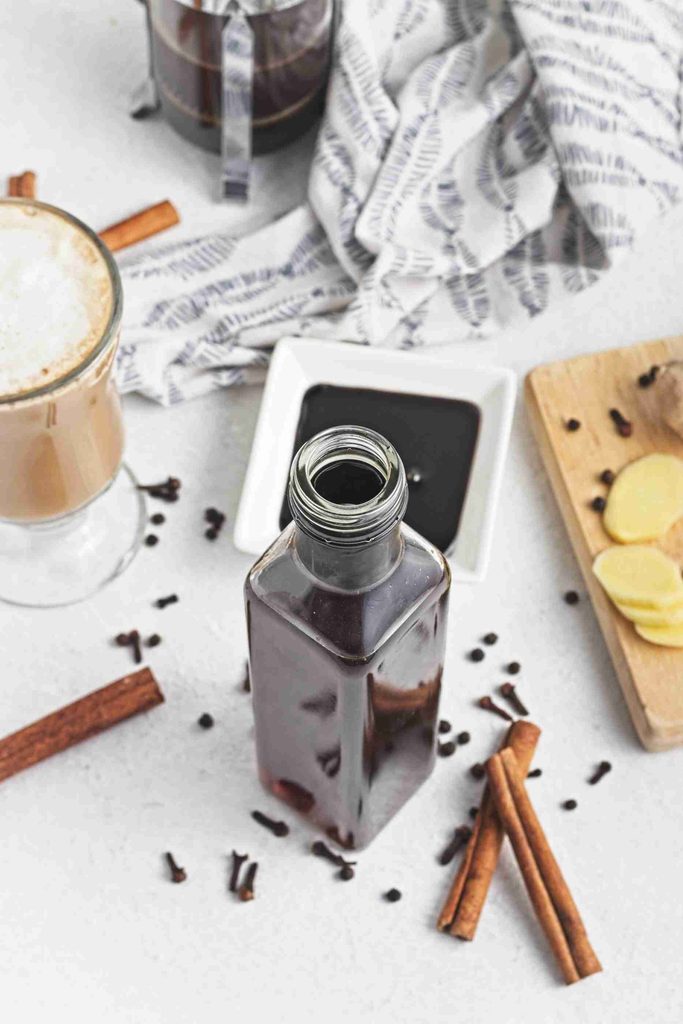
Coffee first, since a gingerbread coffee syrup is what most of this bottle will become. One ounce (2 tablespoons) is the pour for an eight-ounce coffee or a single-shot latte. Stir it into warm milk rather than straight into the espresso and it disperses with barely any help.
- Into a chai latte, which puts it next to spices already in the same family
- Stirred into dairy-free hot chocolate a spoonful at a time
- Over pancakes or waffles, warmed for a few seconds first so it soaks in instead of sitting on top
- Stirred through oatmeal, the least glamorous use here and probably the most repeated
Using gingerbread syrup for cocktails works the way any spiced simple syrup does in a drink: it stands in for the sugar and brings the spice along with it. Half an ounce to an ounce replaces the sugar cube in an old fashioned. A full ounce shaken with vodka, Irish cream and a splash of half and half makes a gingerbread martini. Half an ounce goes into a mule alongside the lime and ginger beer.
Bottled up it works as a holiday coffee syrup for a gift basket too, and needing to stay refrigerated is the only complication. A small bottle, a tag with the date, and a bag of coffee beans next to it covers the whole thing.
Questions You May Have About This Syrup
Can I make gingerbread syrup without molasses?
You can, and you’ll have a good spiced syrup, but it won’t be a gingerbread one. Molasses is what carries it past “warm spices” into the flavor gingerbread is actually built on, and light brown sugar only holds a small amount of it on its own. If you’ve run out, dark brown sugar in place of the light gets you partway there.
Can I use ground spices instead of whole?
You can, but you’d be making a different syrup. Ground spices don’t strain out, so instead of infusing and then leaving, they stay in the bottle indefinitely, keep extracting, and settle into a layer at the bottom of whatever you pour. The whole spices here are doing a job ground ones can’t, which is leaving 😉
How long does it keep?
Two weeks in a sealed bottle in the fridge. A syrup infused with fresh ginger doesn’t hold as long as a plain sugar-and-water one, so err toward the shorter end rather than pushing it. Cloudiness, or anything fuzzy on the surface, means it’s no longer good to consume.
Is this like the syrup in a coffee shop gingerbread latte?
Closer in use than in composition. A café syrup is built to be shelf stable and pumped, so it’s mostly sugar, water and flavoring. This one takes its flavor from actual ginger root and whole spices steeped in a pot, which is also why it lives in the fridge. Starbucks pulled its original Gingerbread Latte in 2019 after nearly two decades on the menu, and gingerbread has come back since only in seasonal, limited-run form, which is a good part of why people started making this at home.
Related Recipes
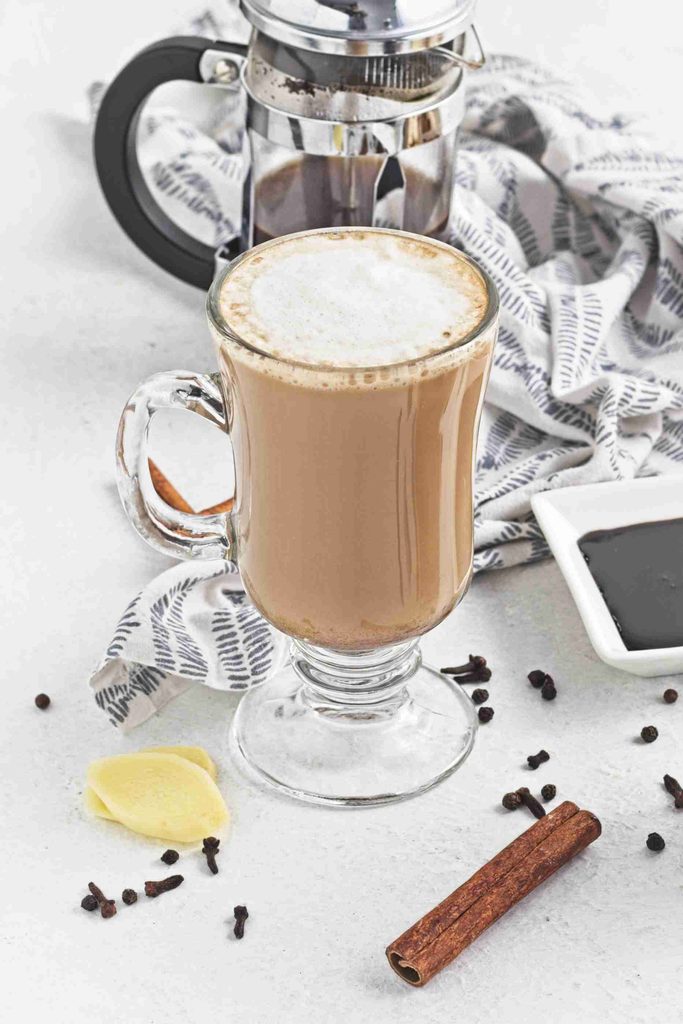
- Gingerbread Latte, the drink this bottle was built for
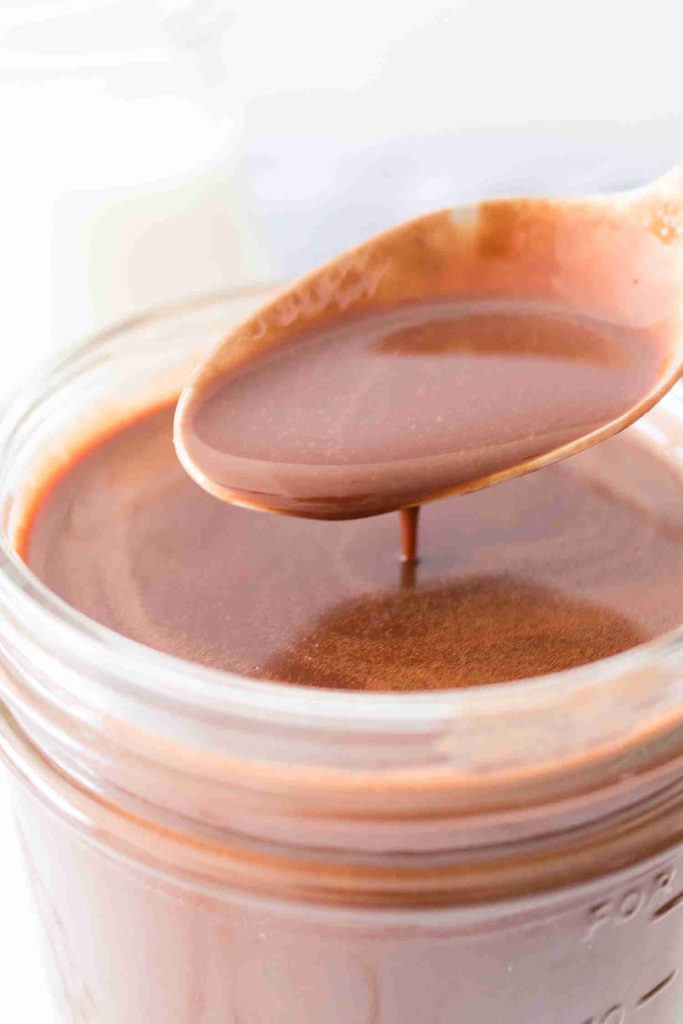
- Silky Cocoa Syrup for Coffee, Milk and Pancakes, the other bottle worth keeping in the fridge door
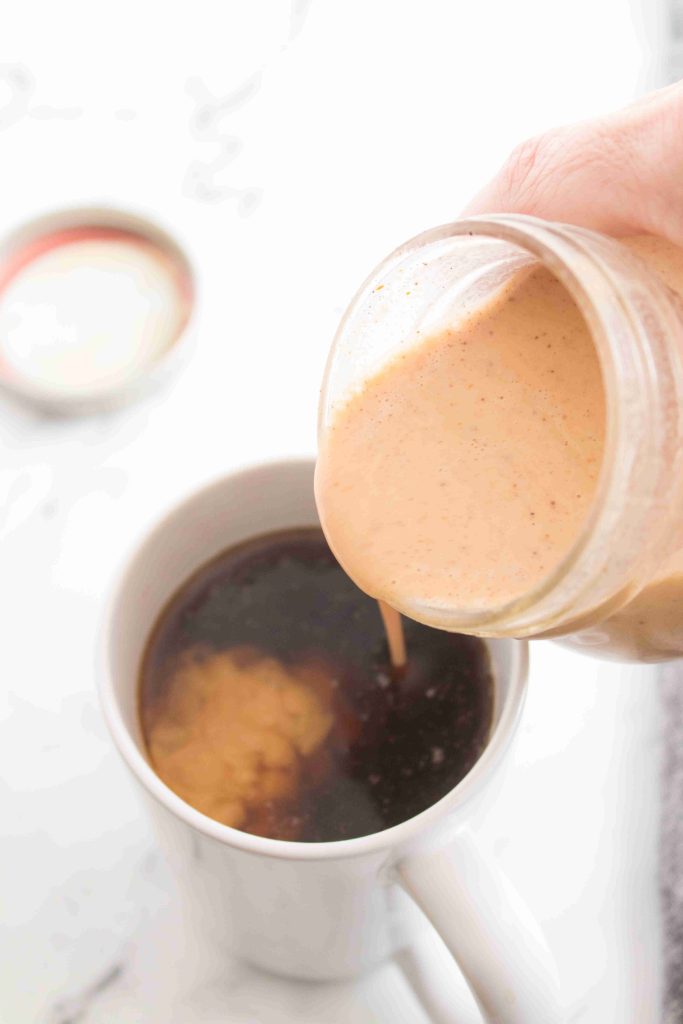
- Homemade Pumpkin Spice Coffee Creamer, for when the season is still leaning pumpkin
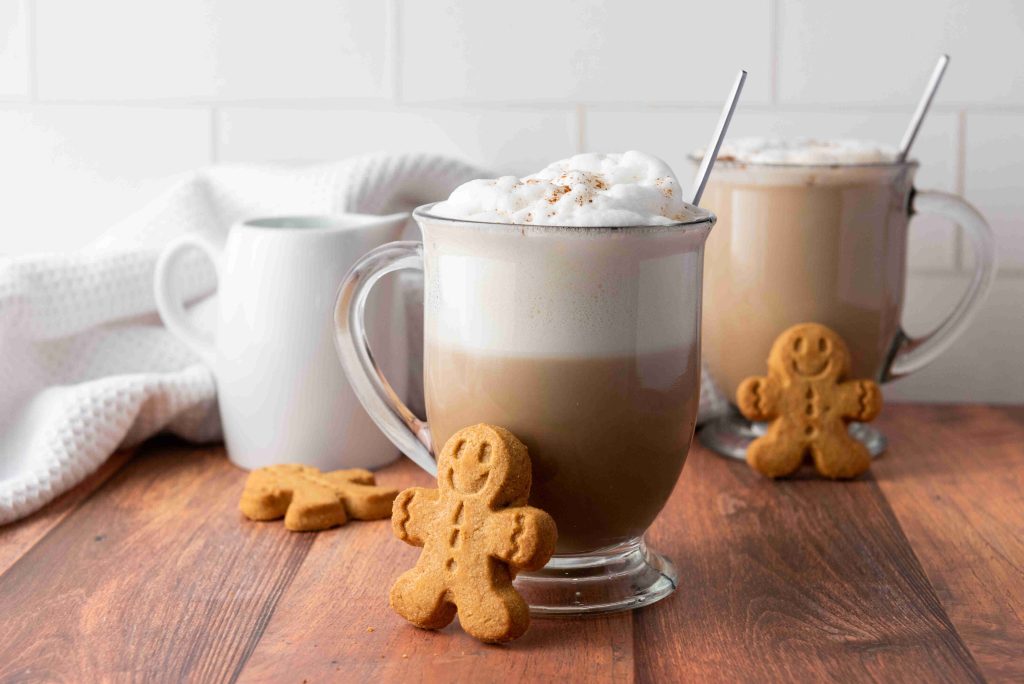
- Best Fall Coffee Recipes, if you want the rest of the coffee lineup

Keep a Bottle in the Door
There’s a particular satisfaction in handing someone a mug of something you made yourself, especially on a morning when nobody had the energy for a production. This bottle does that work for you for two weeks straight. Make a batch on a slow afternoon, pour it into coffee for whoever’s around, and pour it into something stronger later in the day. Save this one to Pinterest so it’s there when the mornings start getting dark.
Homemade Gingerbread Syrup for Coffee and Cocktails
Ingredients
- 1½ cups light brown sugar 305 g
- 1½ cups water 352 ml
- 3 inches fresh ginger 60 g, peeled and thinly sliced
- 2 teaspoons whole cloves 4 g
- 2 large cinnamon sticks 10 g
- ½ teaspoon whole black peppercorns 1 g
- ½ teaspoon ground nutmeg 1 g
- ½ teaspoon ground allspice 1 g
- 2 teaspoons vanilla extract 10 ml
- 1 to 2 tablespoons molasses 15 to 30 ml, NOT blackstrap
Instructions
- Peel the ginger and slice it thinly.
- In a medium pot over medium heat, stir the water and brown sugar together until the sugar has completely dissolved.
- Add the ginger, cloves, cinnamon sticks, peppercorns, nutmeg and allspice.
- Bring to a simmer and cook for 5 minutes.
- Remove from the heat and let it sit for 20 minutes to infuse.
- Strain through a fine mesh sieve. For a completely clear syrup, line the sieve with a layer or two of cheesecloth to catch the ground spices.
- Stir in the vanilla extract and molasses to taste, starting with 1 tablespoon of molasses.
- Let it cool to warm before pouring into a glass or plastic bottle. Seal once fully cool and refrigerate for up to 2 weeks.